System integrations
Data exchange with ERP, CRM, SAP or other software after analysing available interfaces and access permissions.


eMonit Cloud IoT
Need a different report, an integration or support for an unusual device? We develop eMonit around a specific process and agreed requirements.
Describe your projectWe first establish the business need and assess technical options. Scope, cost and delivery dates are confirmed before work begins.
Data exchange with ERP, CRM, SAP or other software after analysing available interfaces and access permissions.
Custom summaries, printouts and calculations. Data presentation adapted to users and their workflows.
User views and additional features based on the agreed use case, without assuming an off-the-shelf module exists for every process.
Assessment of support for non-standard sensors, control modules and data sources based on their documentation.
Integration does not mean automatic compatibility with every system. We need software versions, interface documentation and a description of the expected data exchange.
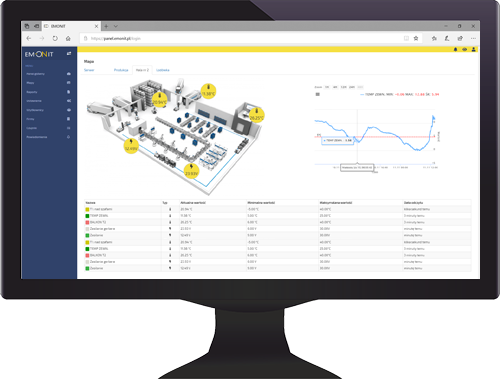
The starting point is the existing eMonit system: readings, history, alerts and data presentation. Additional features are designed around the way you work.
A new feature also brings requirements for access, infrastructure and ongoing support.
We can assess deployment in an agreed environment, including an intranet. Infrastructure and update arrangements must be defined.
Permissions, integration accounts and data flows are agreed with the responsible people on the customer's side.
Maintenance may include administration, availability monitoring, log analysis, backups and error handling, according to the agreement.
A description of the problem matters more than a finished technical specification. Do not send passwords, API keys or confidential data in the initial inquiry.
Describe your projectDescribe your current workflow, the desired change and who will use the solution.
Identify systems, versions, interfaces, device models and available documentation.
List the key features, target date and maintenance requirements.
No. A description of the process and problem is enough. During analysis, we will clarify requirements, dependencies and acceptance criteria.
Do not assume so. Feasibility depends on the system, version, available interfaces and documentation access. Scope is confirmed after analysis.
This option requires an individual project. We define server requirements, responsibility for the environment, updates, access and backups.
After agreeing on scope, dependencies on other systems and required tests. Changes to requirements may affect the quote and schedule.
Support scope, response times and responsibilities are agreed for the project. We do not assume that round-the-clock support or unlimited changes are included in the deployment price.
Describe the process you want to improve and the systems you use.